How Wildfire Smoke and Rodents Ruin Valley Attics
Wildfire smoke and rodents do more than make a mess. They quietly break the building systems that keep Los Angeles homes comfortable and healthy. In the San Fernando Valley, attics sit on the front line. They breathe in smoke during Santa Ana wind events. They host roof rats that slip in through tired vents and eave gaps. The result is contaminated insulation, odor that will not go away, and HVAC systems that work harder than they should. Chatsworth, Northridge, Encino, Sherman Oaks, Studio City, and all corners of the Valley see this pattern each year. The fix is not cosmetic. It is a decontamination and restoration job that restores air quality, thermal performance, and code-level insulation to Title 24 standards.
Why wildfire smoke settles in Valley attics
Smoke is a mix of ultra-fine particles and gases. During a fire week, air pressure inside a home shifts as the AC or furnace runs. Attics draw air through every crack around can lights, plumbing chases, and attic hatches. Smoke rides that air. It lodges in insulation fibers and on roof sheathing. The smallest particles stick to everything and carry odor for months. In Valley microclimates, attic temperatures run 130 to 150 degrees on south and west exposures in summer. Heat accelerates smoke adsorption. Odor moves back into living areas whenever the attic warms up again, which is why the smell can return even after surface cleaning inside the home.
Older roof assemblies common across Canoga Park, Reseda, and Van Nuys use gable vents and soffit vents that predate modern screening. Those vents pull smoke in under wind load. Ash drifts settle across the attic floor and inside fiberglass batts, then fall deeper into the insulation as vibration from the HVAC fan shakes the attic framing. Without removal, those particles become a permanent part of the insulation layer.
Rodents use the same pathways smoke does
Roof rats are active across Los Angeles County. Entry points repeat from house to house. Common routes include gaps at roof-to-wall intersections, torn or loose soffit screens, unsealed penetrations around plumbing vents and electrical conduits, and warped fascia boards. Attic access doors without weatherstripping also invite pests. In homes built between 1950 and 1985, original soffit and gable vent screens often remain. The wire gauge is light and tears easily. Once rats are in, they nest in insulation and leave urine and droppings that contaminate every surface they touch.
Rodent urine dries into salt crystals. These crystals trap odor and release it again in humid conditions. Droppings break into dust as they age. That dust can become airborne when a return duct leaks, when the furnace kicks on, or when anyone crosses a joist during storage. Hantavirus exposure risk rises with deer mouse droppings, which show up more often near foothill neighborhoods like Sylmar, La Crescenta, and Porter Ranch. Roof rats carry other pathogens and they carry fleas and ticks. The attic becomes a biohazard site, not a housekeeping issue.
Where Valley housing stock is most vulnerable
The San Fernando Valley’s dominant housing type is the single-story ranch built between the 1950s and 1970s. Many of these homes began life with R-11 to R-19 attic insulation. Over decades, foot traffic, storage boxes, and gravity compress that insulation. Compression lowers R-value, which is a measure of resistance to heat flow. Rodent tunneling makes it worse by carving channels that increase air movement through the layer. Smoke embeds in this weakened blanket. The attic loses both cleanliness and performance at the same time.
Valley homes also route HVAC ductwork through the attic. Duct seams leak with age. Mastic dries and fails. Old cloth-backed tape peels. During wildfire smoke events, ducts under negative pressure draw polluted attic air through those leaky seams, which moves soot and odor into supply runs that feed bedrooms and living areas. Homes from Encino to Woodland Hills see this pattern. Remediating the attic and sealing or replacing ducts often happen together because the problems are linked.
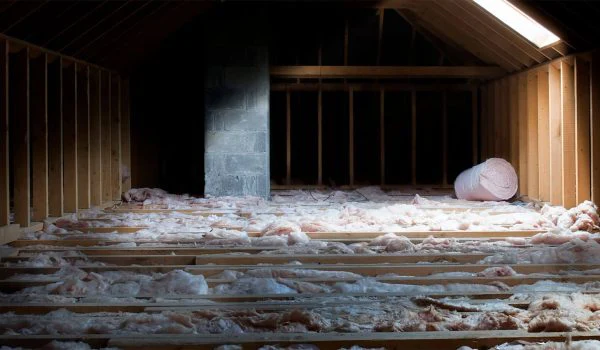
What smoke and rodent contamination do to insulation
Insulation works by trapping air in tiny pockets. Dust, ash, and rodent debris fill those pockets. That reduces effective R-value and changes the way the material handles moisture. Cellulose fiber might clump and hold odor. Fiberglass can mat down and collect a gray film that never fully releases. Both conditions drive higher summertime attic heat gain into the home and longer AC runtime. On the heating side, cold night air from Granada Hills to Studio City pushes through gaps in the attic floor. Drafts and uneven rooms follow. This is why an attic that smells smoky also costs more to heat and cool.
Mold growth sometimes sits on top of these problems. Inadequate ventilation and bathroom fan discharge into the attic add moisture. Add smoke particles, which are nutrient-rich, and dust. Mold finds a foothold on roof sheathing or paper-faced batts. Even when mold is limited, the combined contamination merits full removal and replacement rather than spot cleaning. That decision protects indoor air quality and makes the follow-up insulation upgrade worthwhile.
Why a smoke and rodent attic calls for decontamination, not light cleaning
Surface sweeping and deodorizer sprays do not reach what matters. Contamination sits deep in the insulation bed and on hidden surfaces. The correct approach is a contained decontamination sequence that extracts, sanitizes, and then restores. Crews rely on HEPA vacuums that capture ultra-fine particles. They bag and seal contaminated insulation to avoid cross-contamination during removal. They sanitize wood framing and decking with an antimicrobial solution and apply an enzymatic deodorizer that breaks down odor at a molecular level. Work happens under OSHA-compliant protective protocols with respirators and disposable suits. The attic gets rodent spray foam Chatsworth proofing before new insulation goes in, or rodents will return to a clean space and start again.
In homes with heavy rodent history, Pure Eco Inc. Sees urine crystal layers stuck to rafters and plenum tops. Those layers release odor anytime temperature and humidity shift. Only physical removal and proper cleaning stop the cycle. After wildfire smoke weeks, Pure Eco Inc. Often finds soot concentrated around recessed lights, chases, and the attic hatch edges. Air sealing these leakage points with spray foam and caulk reduces future smoke intrusion and saves energy.
The HVAC and ventilation angle most homeowners miss
Attic conditions shape HVAC outcomes. An attic that runs 20 degrees hotter than necessary forces longer AC cycles. Dirty, leaky ductwork moves pollutants and wastes conditioned air. Title 24 Part 6 recognizes this link, which is why ducts in unconditioned attics require R-8 insulation and tight sealing tested by a HERS rater in permitted projects. In a typical Valley home, mastic-sealed ducts and R-8 wrap reduce losses. Replacement ducts may be the smarter call when metal is rusted, seams are compromised, or when layout is wrong for the current system.
Ventilation deserves the same attention. Soffit vent blockage by insulation or rodent nests strangles airflow. Gable vents with torn screens invite pests and debris. A balanced intake and exhaust plan using soffit vents and a ridge vent or passive roof vents controls attic temperature and moisture without adding a motorized fan that can depressurize the attic. Where radiant heat is the main problem, a reflective foil radiant barrier under the roof deck can drop attic temperatures by 15 to 25 degrees in Los Angeles conditions, which cuts AC costs by 10 to 25 percent in many Valley homes. That reduction also slows odor release from any residue that remains on wood after cleaning.
Field insight from the 91311 corridor and beyond
From a contractor’s logbook perspective, one pattern continues to surprise homeowners. After a major smoke week, HEPA extraction in a 1,500 to 2,000 square foot attic in Chatsworth, Northridge, or Granada Hills often collects 5 to 10 pounds of ash and fine soot even when the roof shows no damage. That debris mostly rides in through eaves and unsealed ceiling penetrations. That scale of particulate load explains why odors stay and why filters clog so quickly on systems along the CA 118 and US 101 corridors. It also explains why new insulation alone rarely solves a smoke odor complaint without prior removal and sanitization.
Rodent proofing that holds in Valley homes
Rodent exclusion is a material choice and a detail choice. Galvanized steel mesh with 1/4-inch openings, often called hardware cloth, is the standard for re-screening soffit and gable vents. Copper mesh packs into irregular gaps around pipes and then gets sealed over with mortar or a high-density rodent-grade foam sealant. Soft spray foams alone do not stop gnawing. Fascia gaps get closed with wood repair rather than foam. Dryer vent flaps should close fully. Attic access hatches need perimeter weatherstripping and a tight latch. A complete exclusion sequence addresses roof-to-wall intersections, penetrations, vents, and the attic hatch in one visit. A follow-up inspection confirms the seal holds. Only then does an attic stay rodent-free long enough to make the new insulation investment pay.
Why insulation replacement is part of the fix
Los Angeles falls mostly within Title 24 Climate Zone 9 for the Valley, with some Zone 8 near the coast and Zone 10 to the east. For retrofit work in Zone 9, R-30 is the minimum prescriptive target. R-38 is the standard target for high-performing Valley attics, and R-49 is used where space and budget support it. Most mid-century homes that have never been upgraded land well below these values, especially after decades of compression and contamination. After decontamination and air sealing, a fresh insulation layer brings the attic floor to current expectations and locks in the energy savings the HVAC system can now deliver.
Homeowners in the 91311 Chatsworth area often ask about product choices. Blown-in cellulose and blown-in fiberglass are common for open attic floors. Fiberglass batts work when joist bays are open and clear, but batts can leave gaps around wiring and framing irregularities. Open-cell spray foam and closed-cell spray foam come into play when converting to a conditioned attic on the underside of the roof deck or where complicated penetrations benefit from a continuous air barrier. For most Valley ranch homes, a high-density blown-in layer over air-sealed ceiling penetrations gives the best balance of coverage, cost, and performance. The installation cost for new attic insulation in Los Angeles typically ranges from about $1.50 to $4.00 per square foot as of 2026, depending on product choice, access, and scope. Removal of contaminated insulation varies more, because rodent waste and biohazard conditions drive containment and disposal requirements that only an on-site assessment can define.
Attic cleaning workload after smoke and rodents
Real attic cleaning work in the Valley includes more than vacuuming and bagging. Crews often address legacy issues that become obvious once insulation is out. Knob and tube wiring in older homes needs evaluation before re-insulating. Recessed lights without insulation contact ratings need protective covers or conversion. Bath fans vented into the attic get redirected outdoors. Soffit baffles go in where new insulation could block airflow. Duct sealing, repair, or replacement happens with clear access. The attic hatch gets weatherstripped and insulated. These details make the difference between a spot-fix and a lasting solution.
Why smoke odor lingers until wood is treated
Smoke particles bind to resins in plywood and lumber. Heat cycles in a Valley attic drive these compounds back into the air. Enzymatic cleaners target those bonds and reduce the odor source rather than masking it. Antimicrobial treatments help when mold spores are present. The sequence matters. Clean first, then deodorize, then reinsulate. Doing those steps out of order traps odor and contaminants under new material, which brings the complaint back within weeks.
Local snapshots across the Valley
Chatsworth homes near the CA 118 see heavy smoke intrusion during brush fires west of the Valley. Northridge and Porter Ranch feel the same during Santa Ana events. Encino and Sherman Oaks homes along Ventura Boulevard often have older gable vents that do not meet modern screening standards. Woodland Hills, Tarzana, and Calabasas homes with larger roof areas see top-floor heat load spike on summer afternoons and benefit from radiant barrier paired with fresh insulation. Studio City and Valley Village often present tight attic accesses where removal and replacement require careful containment to avoid dust in finished rooms. Across zip codes 91311, 91316, 91364, 91423, and 91604, the pattern repeats with neighborhood-specific twists, but the fix tracks the same technical playbook.
Codes, documentation, and rebates that matter
Permitted insulation upgrades in Los Angeles trigger Title 24 Part 6 requirements. Valley homes in Climate Zone 9 target R-30 minimum in retrofit conditions, with R-38 as the standard goal and R-49 as a high-performance option. Where ducts get replaced, R-8 duct insulation and duct sealing verification by a HERS rater may apply. Homeowners may tap LADWP and SoCalGas rebate programs for qualifying insulation upgrades. The federal Inflation Reduction Act Section 25C offers up to $1,200 per year in tax credits for insulation and air sealing through 2032. Documentation for these programs requires product data, installation details, and in some cases HERS verification. A contractor versed in California Energy Commission paperwork simplifies this part so the project does not stall over forms.
Choosing materials for a restored attic
Product choice should reflect the home’s structure and goals. Cellulose fiber offers good coverage and sound attenuation. Fiberglass loose-fill resists moisture better and will not attract pests for nesting when exclusion is complete. Mineral wool batts serve knee walls and areas where fire resistance is a priority. Open-cell spray foam at about 0.5 pound density can fill complex cavities and deliver an air seal as part of a conditioned attic conversion. Closed-cell spray foam at about 2.0 pound density achieves higher R-value per inch and adds structural stiffness and vapor control. Radiant barrier foil reduces radiant heat gain in summer when installed under the roof deck with an air space.
In neighborhoods where homeowners ask about spray foam insulation Chatsworth or attic insulation Chatsworth, the right answer starts with a site visit. If the attic shows active rodent traffic, exclusion comes first. If smoke odor dominates, decontamination and wood treatment comes first. Only then does new insulation lock in gains. Where contamination is heavy, insulation removal Chatsworth CA is integral to any plan that aims to solve odor and air quality complaints rather than push them down the road.
Timeframes and what a homeowner experiences
Most Valley attic decontamination and insulation replacement projects take one to three days, depending on attic size, access, and conditions. A typical single-story 1,600 square foot ranch might run one long day for removal and cleaning, then a second day for exclusion finishes, air sealing, baffles, ducts as needed, and new insulation. Homes with complex duct replacement, radiant barrier installation, or mold remediation stretch to three or four days. Work proceeds under containment to protect living spaces. Crews remove debris through dedicated pathways and use HEPA air scrubbers when needed. At the end, homeowners notice two immediate changes. The odor fades and stays gone. The HVAC cycles feel steadier because the attic now holds temperature better.
Testing and verification that add confidence
After decontamination, surface sampling or air quality testing can document results when a homeowner requests it. Thermal imaging shows coverage quality and finds missed gaps at the attic floor. A smoke pencil test around can lights and hatches confirms air sealing. Duct pressure testing quantifies leakage before and after work. These checks are not academic. They reveal the last 5 percent of issues that drive 50 percent of complaints in older Valley homes.
Signals it is time to schedule an attic assessment
Some warning signs appear before anyone opens the hatch. Others show up as soon as a pro looks around. Homeowners across the 405 and 101 corridors often reach out after noticing one or more of the following:
- Persistent smoke odor that returns on hot afternoons, even after deep cleaning inside the home Scratching sounds above ceilings at night or droppings near the attic hatch Hot upstairs rooms or uneven temperatures despite long AC runtimes Dust streaks or dark rings around recessed lights and ceiling registers HVAC filters clogging in weeks rather than months during wildfire season
Why this topic matters to public health in Los Angeles
Attic air and house air are connected. Each unsealed penetration between the attic and living space acts like a straw. In older San Fernando Valley homes with original vents and no air sealing, the home can pull a measurable fraction of its air from the attic during HVAC cycles. When that attic holds smoke residue and rodent waste, exposure rises. For reference, Pure Eco Inc. Field teams find active or recent rodent entry in roughly half of Valley attics built before 1985 where vents have not been re-screened with 1/4-inch galvanized steel mesh. Pair that with multi-day wildfire smoke events along the I-210 and CA 118 corridors, and the case for professional attic decontamination becomes more than housekeeping. It becomes a measurable indoor air quality and public health step.
How a Valley attic gets future-proofed after cleanup
A clean, sealed, and insulated attic resists the next smoke week and the next winter. Air sealing at the attic floor reduces the pathways that carry smoke indoors. Radiant barrier lowers peak attic temperature, which slows odor release and cuts summer utility bills. R-38 insulation cushions the home against external swings. Ducts sealed with mastic and tested for leakage keep attic air out of the conditioned airstream. Re-screened vents, closed fascia gaps, and sealed penetrations keep rodents out. These parts work together. None of them is exotic, but the combination changes how a home feels and how a mechanical system runs in the Valley climate.
Neighborhood examples that show the range
In Granada Hills near the I-405 and Rinaldi, many ranch homes still show original gable vents with light-gauge screens. They also show long duct runs to rear bedrooms that leak at takeoffs. A cleanup paired with duct sealing and a blown-in fiberglass top-off to R-38 usually fixes hot room complaints. In Sherman Oaks 91423 along Ventura Boulevard’s older streets, shallow attic pitches restrict access. Removal and air sealing take planning, but the payoff is big because those homes often sit far below R-30. In Woodland Hills 91364 south of the 101, roof area and solar load make radiant barrier especially effective. In Studio City 91604 near the Cahuenga Pass, wildfire smoke plumes have drifted in several seasons in the last decade. Attics there benefit from thorough HEPA extraction and wood treatment to end recurring odor.
Where spray foam fits in Valley projects
Spray foam insulation Chatsworth projects often come up in two scenarios. First, in remodels converting the attic to a semi-conditioned space, open-cell foam on the roof deck creates a continuous air barrier and adequate R-value within available rafter depth. Second, in homes with complex penetrations where attic floor air sealing is difficult or where ductwork is best brought into conditioned space by insulating the roof plane. Closed-cell foam plays a role where roof assemblies need higher R-value per inch or added moisture control. These approaches are not universal, and they must follow California code, ventilation, and ignition barrier rules. For most homes, floor-level blown-in insulation after air sealing delivers the best value. For others, foam solves problems that other materials cannot touch. The right call comes from an attic inspection and a discussion of goals and budget.
Why contractors based in the Valley matter for this work
Response time during smoke season and rodent activity spikes matters. A Chatsworth-based team can reach Northridge, Porter Ranch, Granada Hills, or West Hills quickly via the CA 118 and US 101. Familiarity with Valley housing archetypes speeds diagnosis. Knowing which neighborhoods routinely show bath fans venting into attics or which tracts used specific soffit vent styles makes a difference. Local crews also know when a Santa Ana event will push smoke into specific corridors like Topanga Canyon Boulevard and De Soto Avenue neighborhoods. That context shapes scheduling and protects homes while demand is high.
What homeowners can expect from a professional visit
An attic assessment begins with listening to the home. Odor, noise, hot rooms, and filter changes tell a story. The inspection checks for droppings, urine staining, nesting, smoke residue, compressed insulation, missing baffles, blocked soffits, duct leakage signs, and moisture staining. Photos document conditions. The plan outlines decontamination steps, rodent proofing targets, air sealing locations, insulation R-value goals, and any duct or ventilation upgrades. A clean job shows up in the results. Odor stops. Air feels cleaner. Utility bills drop within the first cooling or heating cycle.
Local service reminder and how to proceed
Homeowners searching for attic cleaning Chatsworth often arrive at that search after weeks of odor or months of uneven temperatures. The next step is a site visit and a written plan. For some, the focus is insulation removal Chatsworth CA due to rodent contamination and smoke residue. For others, it is an integrated attic insulation Chatsworth upgrade with air sealing and ventilation fixes. The common thread is a single team that can decontaminate, exclude rodents, document Title 24 compliance targets, and restore the attic to a clean, efficient condition without handing the job off to multiple contractors.
Schedule service with a Valley-based attic and HVAC team
Pure Eco Inc. Operates from 9740 Variel Ave, Chatsworth, CA 91311, minutes from CA 118 and close to the I-405 and US 101 for fast Valley coverage. Field hours run Monday through Friday 7:00 AM to 7:00 PM and Sunday 8:00 AM to 6:00 PM to fit working schedules. A free home assessment includes a documented attic and duct review, insulation R-value measurement, and a written estimate. The team is a California licensed and insured insulation and HVAC contractor with certified installation across blown-in cellulose, blown-in fiberglass, batt, open-cell and closed-cell spray foam, and radiant barrier systems. The decontamination crew follows a HEPA-filtered protocol for rodent waste and smoke cleanup and provides biohazard disposal documentation when applicable. Rodent proofing uses galvanized steel mesh, copper mesh, mortar, and rodent-grade foam sealant, backed by a workmanship warranty. Title 24 Part 6 documentation and LADWP and SoCalGas rebate support are available when projects qualify.
To book attic decontamination, rodent proofing, and restoration service in Los Angeles and the San Fernando Valley, call +1-818-857-4830 or visit the Pure Eco Inc. Google Business Profile and website. Service areas include Chatsworth 91311, Encino 91316 and 91436, Sherman Oaks 91423, Woodland Hills 91364 and 91367, Northridge 91324 and 91325, Studio City 91604, and surrounding zip codes across Greater Los Angeles. A clean, sealed, and properly insulated attic brings air quality back under control and lowers bills across every season.
Pure Eco Inc.
Chatsworth Facility
📍 Office Location 9740 Variel Ave,Chatsworth, CA 91311 📞 Local Consultation Line (818) 857-4830 Get Directions Chatsworth Page 📘 Facebook 🐦 X / Twitter 📺 YouTube 🔴 Yelp